Caloroga Opens AI Podcast Studio Linnet to All Creators
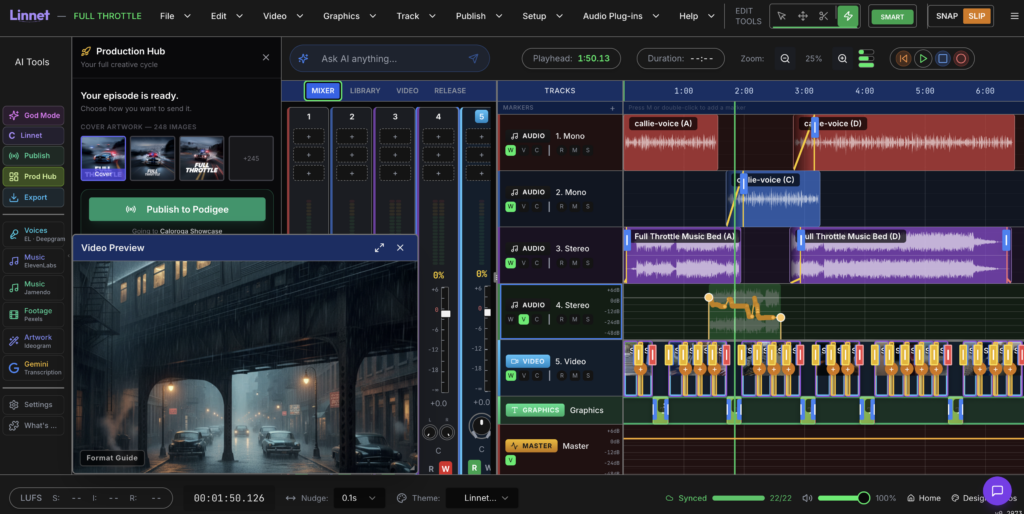
Caloroga Media, a New York podcast company known for short daily shows voiced by AI, has opened its production studio Linnet to the public with no waitlist or invitation. The company announced the move on Tuesday, according to a report from a news outlet that carried the announcement and referenced earlier coverage by Net Influencer.
What Linnet Offers
Linnet combines scripting, AI voices, music, artwork, a 24-track audio editor, video editing and publishing in a single browser tab. Its “God Mode” feature turns one prompt into a draft episode on an editable timeline. An audio-to-video tool adds clips, captions and graphics to an existing recording for YouTube and social platforms.
The public beta began on November 2, Net Influencer reported. Paid plans start at $16 a month, and the Starter and Creator tiers are free until December 1. Linnet publishes directly to Podigee, Buzzsprout and Transistor.fm, which a Caloroga representative described as the only hosting companies offering affordable video API access.
Co-founder John McDermott said smaller creators struggle to keep pace with video unless they have large budgets, and that Linnet is meant to keep the creator in control of the finished product. Co-founder Mark Francis said the company is opening the studio to put it in the hands of more creators.
Video Raises the Stakes
Edison Research reported in June that video podcast consumption passed audio-only consumption for the first time in the third quarter of 2025. It found 82% of U.S. weekly podcast consumers actively watching video, against 78% listening to audio only. In Acast’s Podcast Pulse survey of 4,300 listeners across 13 markets, 88% said they consume both audio and video podcasts.
Money is following the format. Spotify now shares premium subscription revenue with video creators through its Partner Program, which Flightcast cited when it began selling automated YouTube-to-Spotify distribution for $100 a month.
A Crowded Field
Linnet joins other AI-assisted tools. Descript offers an AI voice-cloning tool called Overdub, according to its website. Riverside launched an “AI Twin” in September that generates video of a creator from a script, and added direct video publishing to Apple Podcasts in July, per its product updates page. Los Angeles studio Inception Point AI had produced 200,000 episodes at about $1 each, CEO Jeanine Wright told the Los Angeles Times last December.
Francis told Net Influencer that Linnet uses preset voices with no voice cloning, that God Mode output is meant to be edited before release, and that the company does not train AI models on creator content.
Listener Limits
Audience attitudes suggest limits to automation. In Edison’s Podcast Consumer 2026 study, 69% of U.S. weekly podcast consumers approved of generative AI for research, while 25% approved of an AI-generated host voice. Sixty-two percent called AI a threat to podcast credibility.
Caloroga says its own shows have passed 10 million downloads. It has not disclosed how many creators have signed up since the beta opened, and Francis said Linnet will stay in beta while feedback shapes new features in 2027.
Source: netinfluencer.com
Image: netinfluencer.com